Showing posts with label Iran. Show all posts

Tuesday, February 9, 2010

Reading Vali Nasr and Pondering US Policy


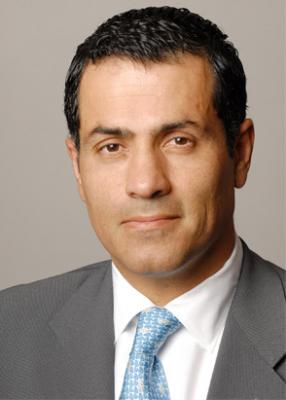
Few books, recently, have prompted me to question my own mindset more than Vali Nasr's The Heart of Islam.

I'd like to think of myself as an open-minded person. Although I am an atheist I willingly recognize that Islam, with its emphasis on truth, charity, and peace, has a lot to offer to anyone's personal philosophy. I know that the Muslim organizations with whom my country is at war only represent an extreme component of the faith. I understand that the Muslim world, while distinct from my own in many ways, has a vibrant culture which deserves the honor and respect of all who are exposed to it.

Yet along with that understanding, I have to say there are aspects of Islamic culture that strike me as simply wrong. The example of the hijab comes to mind. In the Islamic Republic of Iran, the veil is mandated by law. Many women in that country wear it willingly and as a source of pride, yet many others struggle against at as an imposition by the state. To my mind the imposition of the veil is wrong, not because the veil itself is oppressive, but because the garment itself is imposed - the choice of whether to wear the article of clothing was removed from the person. I believe that this imposition is an injustice - I believe something should be done about it.

The obvious rejoinders include the fact that Iran does not represent the whole Islamic world, that the mandatory veil is an "invented tradition" that twists the words of the Prophet, and that it is unfair to hold the world's billion plus Muslims accountable to the policies of one authoritarian regime. These are all valid points. Nasr, in his book, adds one to the list - who am I, as a westerner, to determine what is just and unjust in any Muslim culture, even one that exists on the fringes as Iran does? Towards the end of his book, Nasr makes the argument that it is arrogant and ignorant of western observers to try and impose their own values upon the Muslim world. Nasr presents the possibility of a debate over values between Westerners and Muslims.

"The debate could continue for a long time, but at the end the Muslim interlocutors would thank their Western counterparts and state that they were grateful for their concern, but that if they really wanted to be friends and fellow human being,s the should not impose their views but ask the Muslim team what they considered to be the rights that were most missing in their lives and that their Western friends could help to realize." (pg 289)

Essentially, its the argument for self-determinism. Nasr isn't stating that he's against letting women choose whether veiling is right for them - he's arguing that it is up to Islamic culture, not the West, to make that judgement. He's not angry at countries with Muslim populations who walk about unveiled - he's angry with the model of forced unveiling represented by the Western-emulating Ataturk and Reza Shah. Ultimately Nasr is making the point that it is not the West's responsibility to intervene and force change, even when it genuinely feels that real injustice is being done.

It's an eloquent argument, and I wrestle with it. The track record of the West is hardly pristine, for one thing - I often need to remind myself that the founding of my own nation coincided with the mass occupation and usurpment of hundreds of millions of Native Americans. And, for another, I have to remember that the values of human rights are not always my nation's chief priority in the modern day.

A few paragraphs after that argument, Nasr touches upon another point that hits directly home.

"Anything less than mutual respect in understandingthe other side makes a sham of the question of human rights. And when the issue of human rights is used as a tool for policy by Western powers, it tends to nullify the efforts of those in the West who, with sincerity and good intention, are seeking to help others all over the globe to preserve the dignity of human life." (pg 290)

It might not have struck me so pointedly if I had not, the night before, prepared a briefing memo advocating that the Iranian Revolutionary Guard's abuse of human rights should be used as a justification for applying targeted sanctions in the midst of the nuclear dispute.

It's a complex issue - In one context, both human rights abuse and nuclear proliferation are bad, and it is justifiable and right to advocate against them together. But it is also very important to make sure that one's condemnations against the abuse of human rights are genuine and not simply politically salient. My country supports the regimes of how many authoritarian but pro-western leaders, who, if free and fair elections were today held in their country, would immediately be shown the door and replaced with someone less friendly to our own interests? Can the US claim to be acting on behalf of the Iranian people, standing up for human rights, if last October it cut funding for multiple NGOs that documented and publicized instances of human rights violations? While the administration didn't comment on precisely why it took the action, many folks up on the hill argued that it was a decision in keeping with Iranian activists own wishes, and to prevent the impression that the U.S. was attempting to intervene in in Iranian domestic affairs.

This is all well and good, but there is something hypocritical about claiming that the United States wishes to "let the Iranians determine their own fate" on Monday and then on Tuesday citing domestic injustice as justification for sanctioning the Iranian regime. Especially when sanctions just happen also to be levied on the basis of our own security interests.
So, I am torn. On the one hand I heartily believe that we should criticize Iran for oppressing its own citizens, and, for that matter, that we should go further in promoting human rights and democracy in Saudi Arabia, a nation which many forget has even less of a claim to democracy than does Iran. But at the same time I also believe that we in my country need to recognize that the US, as great as it is, does not have a direct connection to the "Ultimate Truth" hotline. (Or, if we do, we haven't really been following its advice to the letter.) We need to be conscious of our own failures and hypocracies, even while we campaign for the greater good.

So, on one level we need to figure out just what we believe about the world. The US can't claim to stand for justice if the only times we act against injustice are when the "unjust" are acting against our interests. We should mean it when we say we support freedom and democracy, we should be willing to sacrifice to achieve that goal, and we should be willing to be criticized when we fail to live up to that goal.

And we need to consider the point Nasr is making - that engaging the Muslim world on, as Obama said in Cairo, the basis of "mutual respect and mutual interest," actually does require a change in our own behavior. We need to recognize that the much of the Middle East does not feel as though it needs American saving, and that our own cultural history is hardly earns us authority to preach. While advocating the values that we genuinely hold dear, we should also be conscious of our nation's imperfections, and act towards the rest of the world with a bit of humility as well as pride.


Wednesday, December 23, 2009

Complex Respect for a Power Figure in Iran

NThe Lede Blog of NYTimes.com often has some really fascinating material on current events in Iran. Yesterday's post was about senior opposition cleric Grand Ayatollah Youssef Sanei and his recent troubles with the Iranian government. I'm very interested in Sanei and what he represents. According to this Witness Online documentary (link provided by The Lede), the Ayatollah considers himself a "modern" religious practioner who follows the news and works to adapt Islamic teachings to the contemporary world.

In addition to a daily sermon, Sanei runs a website and telephone hotline for people to call in and get religious advice on a variety of matters. He condones abortion under certain medical circumstances, denounces suicide bombings, and encourages all people to ensure their cars. Sanei quickly breaks the western stereotype of the Khomeni-esque Iranian cleric; the firebrand social conservative.

As an atheist I am generally uncomfortable with religious figures, even those with whom I agree, holding a place of great social authority. Religion has a tremendous ability to unite people and encourage moral behavior, but simultaneously it is capable of retaining practitioners in the moral world of millenia ago. "Thou shall not murder"remains just as valid as ever, but there's a passage or two in Leviticus that needs updating, and I want my representatives in government to know that.

Yet I find myself less worried about this Iranian cleric who, in the youtube video above, denounces suicide bombers and the nuclear bomb in more or less secular terms.

Sanei on nuclear weapons:

"Nuclear bombs destroy heaven and earth.... What is the sin of the plants? the unborn children? the environment which belongs to all humantiy? The nuclear bomb destroys everything, so we are not allowed to use it even in defense of ourselves. You have to attack the enemy, but the innocent people? So using the nuclear bomb, which is a blind weapon, is forbidden in Islam."
On sucicide attacks:

"Suicide bombing is a crime and a sin. That's two - resulting in the killing of innocent people. Suicide bombing is against Islam, against common sense, and human dignity. What al Qaeda and the Taliban are doing is a sin - it's against basic human principles."
I can get behind this. His denunciation of these forms of violence include quite a few mentions of "sin" and "Islam", but his exortations against attacking the innocent, against using blind weapons - are arguments that all people, including atheists, could discuss and find valid.

I find Ayatollah Sanei interesting for the same reason I find the Pope interesting, or the Dalai Lama. I find myself having great respect for this moral figure, who tells men that they shouldn't worry about shaving their beard and applies scrutiny to his own behavior such that he wont reveal which newspapers he reads in the morning for fear of endorsing one over the other. I may not be comfortable with the concept of religious authorities, but I appreciate good men and women where they are found.

Sunday, March 22, 2009

Iran and the US - On the Path to Renewed Relations?


Despite yesterday's New York Times article declaring that "Iran's Supreme Leader Rebuffs Obama", I think there are some encouraging signs that relations between Iran and the US are going to get better.

Throughout his campaign for the Presidency, Barack Obama maintained a unique perspective on what the United State's relations with Iran should be. While many disagreed with President Bush's decision to dub Iran a member of "The Axis of Evil," there were few mainstream politicians who openly advocated the renewal of direct diplomatic negotiations with Iran, which had been terminated after the Iranian Islamic Revolution of 1979. As a result, Obama's statement that as President he would be open to direct talks with Iranian leaders, without pre-conditions, became debate point during the primary and general campaigns. It was one of the reasons I first became attracted to him as a candidate.

The shift in White House diplomatic rhetoric became apparent not long after his inauguration. Most of the news world was surprised when Obama selected Al Arabiya, an Arabic news station, to conduct his first video interview after the inauguration. When asked about Iran, he maintained the stance of the previous administration in that the United States did not look favorably upon a nuclear weapon-armed Iran, but he also injected a note of conciliatory dialogue.
"Now, the Iranian people are a great people, and Persian civilization is a great civilization. Iran has acted in ways that's not conducive to peace and prosperity in the region: their threats against Israel; their pursuit of a nuclear weapon which could potentially set off an arms race in the region that would make everybody less safe; their support of terrorist organizations in the past -- none of these things have been helpful.

But I do think that it is important for us to be willing to talk to Iran, to express very clearly where our differences are, but where there are potential avenues for progress. And we will over the next several months be laying out our general framework and approach. And as I said during my inauguration speech, if countries like Iran are willing to unclench their fist, they will find an extended hand from us."

Al Arabiya interview - 26/01/09
A full transcript of the interview can be found here.
This week the White House released a video on the beginning the Iranian holiday of Nowruz, which marks the beginning of spring and the new year. The message heavily emphasized a language of respect for the Iranian history and culture.

Of course, a rhetoric of respect on one side does not mean that the diplomatic issues that have divided the US and Iran are going to somehow resolve themselves. For one thing, Iranian leaders themselves have been fairly reticent in their response to the message. President Ahmadinejad and Supreme Leader Khamenei both pointed out in this week that US and US engineered sanctions against Iran remain in place, preventing the trade of many goods that would be extremely beneficial to Iran's economy. Khamenei, before a crowd of ten thousand in the city of Mashaad, declared that “They chant the slogan of change but no change is seen in practice,” and, unless you count the American invitation of Iran to a panel on Afghanistan, he's right. While its rhetoric has shifted substantially, White House policy towards is essentially unchanged in these first few weeks of the Obama Administration.

Then again, this is how things get started.

In his speech Khamenei also addressed the American nation saying, “should you change, our behavior will change, too.” One way to look at this situation is to see it as a mirror of the last 30 years of policy in which each side refused to budge until the other backed down. But I choose to emphasize, with the coming of a new regime, the possibility that United States is on the verge of a paradigm shift. Obama's foreign policy has always projected itself as much more conciliatory than its predecessor's - a magnanimous gesture such as reducing sanctions, or suggesting the establishment of embassies, is very much in keeping with the political image Obama has generated for himself thus far.

Ultimately, I am aware that Obama has yet to radically evolve the way the United States and Iran interact, and I'm conscious that he probably will be unable make a significant change until after the economic crisis at home has been resolved. But, in seeing all the political groundwork-laying work that the Obama administration has performed, I am fairly "hopeful" that there will be an evolution in the way the White House does international relations. Obama has talked the talk - now let's see the "change" he intends to bring to American Foreign Policy.